Sensitive Skin Guide: How to Create a Gentle Skincare Routine That Actually Works
The best skincare for sensitive skin focuses on repairing your lipid barrier with gentle, anti-inflammatory ingredients. Mānuka honey, niacinamide, and ceramides calm inflammation and rebuild your skin's protective layer, while avoiding synthetic fragrance, sulfates, and harsh acids. Below, certified herbalist Colleen Poe walks you through why skin becomes reactive, the ingredients that actually help, and a simple 3-step routine for sensitive, acne-prone skin.
If your skin flares up at the slightest change, you're not imagining it. A new product, a shift in weather, even stress can set it off. Sensitive skin is real, it's common, and it's not something you have to just live with.
This guide walks you through why skin becomes reactive, what ingredients to look for (and avoid), and how to build a gentle skincare routine for sensitive, acne-prone skin that works with your skin instead of against it.
What Makes Skin Sensitive?
Sensitive skin isn't a single condition. It's a pattern. Your skin's outermost layer, the lipid barrier, is responsible for keeping moisture in and irritants out. When that barrier is compromised through over-exfoliation, harsh cleansers, environmental exposure, or simply genetics, irritants get in that our body would otherwise keep out. Your skin responds with redness, tightness, stinging, or breakouts.
The frustrating part? Many conventional skincare products make it worse. Synthetic fragrances, sulfates, alcohol-based toners, and aggressive actives can strip what little protection your barrier has left. That's why the best skincare for sensitive, acne-prone skin isn't about adding more products. It's about choosing fewer, better ones.


The Ingredients Sensitive Skin Actually Needs
Your skin is asking for two things: repair the barrier, and stop the irritation cycle. Here's what does both.
Mānuka honey is one of nature's most effective skin-calming ingredients. Its 200+ bioactive compounds, led by methylglyoxal (MGO), work at a cellular level to reduce inflammation, fight bacteria without disrupting your skin's microbiome, and support natural healing. Unlike synthetic alternatives, mānuka honey hydrates while it protects. That makes it especially well-suited for skin that's both sensitive and breakout-prone.
Kelp bioferment delivers deep hydration while reinforcing your skin's natural moisture barrier. It's rich in minerals and amino acids that help your skin hold onto water without feeling heavy or greasy.
Niacinamide (vitamin B3) strengthens the lipid barrier over time, reduces visible redness, and helps regulate oil production. All without the irritation that comes with stronger actives like retinol or glycolic acid.
Cold-pressed seed oils and ceramides replenish the lipids your barrier is missing. Think of them as the mortar between the bricks of your skin cells. Without them, everything crumbles.
What to avoid: Synthetic fragrance (the #1 sensitizer in skincare), sulfates (SLS/SLES), denatured alcohol, and high-concentration exfoliating acids. If a product burns, stings, or leaves your skin feeling "tight and clean," it's doing damage, not cleaning.
How to Build a Gentle Skincare Routine
A sensitive skin routine doesn't need to be complicated. In fact, simplicity is the point. Three steps, morning and evening, is enough to see real change. Usually within one full skin cell renewal cycle (about 28 days).
Step 1: Cleanse without stripping.
This is where most routines go wrong. Foaming cleansers and bar soaps with sulfates strip your skin's natural oils, leaving your barrier weaker after every wash. A milk cleanser for sensitive skin dissolves dirt, makeup, and excess oil without disrupting your lipid barrier. Apo.Ge's Clarifying Milk Cleanse uses a milk-based formula that leaves skin clean, soft, and never tight.
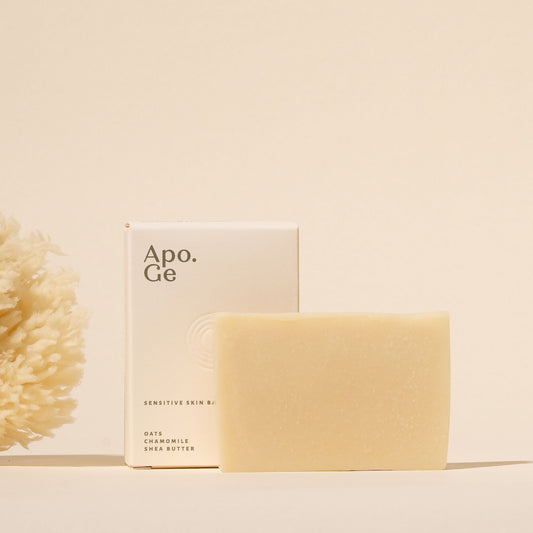
If you prefer a bar, look for one formulated specifically as a bar soap for sensitive skin. One without sulfates, synthetic fragrance, or harsh detergents. The Apo.Ge Sensitive Skin Bar uses mānuka honey and gentle botanicals to cleanse while calming reactive skin.
We have a whole blog dedicated to why we think milk cleansers are magic.
Step 2: Hydrate and calm.
After cleansing, your skin needs hydration locked in before it evaporates. A face cream built for sensitive, breakout-prone skin should moisturize and nourish without clogging pores. The Deep Hydration Face Cream combines mānuka honey, kelp bioferment, and niacinamide. It calms inflammation, reduces the appearance of redness, and hydrates without heaviness. This is the step where real change happens over time. Learn more about the right moisturizers for acne-prone skin.
Step 3: Strengthen and protect the barrier overnight.
At night, your skin shifts into repair mode. A night elixir with cold-pressed super seed oils and ceramides replenishes your barrier while you sleep. Apo.Ge's Renewing Night Elixir was formulated specifically for skin that's dehydrated, sensitive, or acne-prone. It nourishes without triggering breakouts.
That's it. Three products, twice a day, for 28 days. No 12-step routine. No guessing.
Your Sensitive Skin Essentials
Deep Hydration Face Cream
Mānuka honey, kelp bioferment, niacinamide, and white tea extract. Calms inflammation, reduces the appearance of redness, and deeply hydrates without clogging pores. Rich but not heavy. Your skin will feel the difference.
Shop Deep Hydration Face CreamWhat to Expect (and When)
Sensitive skin didn't get that way overnight, and it won't calm down overnight either. Here's a realistic timeline:
Week 1: Your skin starts to feel less tight after cleansing. The constant low-grade irritation begins to quiet down. Your skin is softer and more supple as moisture levels improve.
Week 2 to 3: You notice fewer reactive flare-ups. Your skin looks less dull, more even. Redness starts to fade as inflammation decreases and your barrier begins to repair itself.
Week 4 (the full renewal cycle): This is where it comes together. Your skin has fully turned over once with the support of barrier-building ingredients. Most people notice a visible difference in texture, tone, and fewer breakouts.
The key is consistency. Your skin needs to trust that you've stopped assaulting it before it can fully recover.
Start Simple: The Essentials Set

If you're not sure where to begin, the Essentials Set gives you the comple
te three-step routine. Clarifying Milk Cleanse, Deep Hydration Face Cream, and Renewing Night Elixir, at a better value than buying individually. It's everything your sensitive skin needs, and nothing it doesn't.
For those who want to explore the full range first, the Discovery Set includes minis of every Apo.Ge product. A low-commitment way to find what works best for your skin.
Start Your Gentle Skincare Ritual
The Essentials Set
Clarifying Milk Cleanse + Deep Hydration Face Cream + Renewing Night Elixir. The complete three-step ritual for sensitive skin. Everything your skin needs, nothing it doesn't.
Shop the Essentials SetSensitive Skin FAQ
What causes sensitive skin, and can skincare make it worse?
Sensitive skin happens when your lipid barrier — the outermost protective layer — is compromised. Genetics, over-exfoliation, harsh cleansers, and environmental exposure all play a role. Yes, the wrong skincare absolutely makes it worse. Products with synthetic fragrance, sulfates, and alcohol strip your barrier further, creating a cycle of irritation. The fix is switching to barrier-supporting ingredients like mānuka honey, ceramides, and niacinamide.
Is bar soap better than liquid cleanser for sensitive skin?
It depends on the formula, not the format. Traditional bar soaps with sulfates will dry out sensitive skin. But a bar soap formulated specifically for sensitive skin — like one with mānuka honey and no harsh detergents — can actually be gentler than many liquid cleansers. Bar soaps also tend to have fewer preservatives, which means fewer potential irritants. Apo.Ge's Sensitive Skin Bar was designed exactly for this.
What ingredients should people with sensitive skin avoid?
The biggest offenders: synthetic fragrance (the #1 cause of skin sensitization), sodium lauryl sulfate (SLS), denatured alcohol, and high-concentration exfoliating acids like glycolic acid above 10%. Also watch for essential oils in high concentrations — "natural" doesn't automatically mean gentle. A good rule: if a product burns, stings, or leaves your skin feeling tight, it's damaging your barrier.
What's the difference between sensitive skin and sensitized skin?
Sensitive skin is a skin type you're born with — your barrier is naturally thinner or more reactive. Sensitized skin is a temporary condition caused by external damage: over-exfoliation, harsh products, sun damage, or environmental stress. The good news is sensitized skin can fully recover with the right care. True sensitive skin can be managed beautifully but requires ongoing gentle formulations.
Can natural skincare products irritate sensitive skin?
"Natural" isn't a guarantee of gentleness. Essential oils like tea tree, peppermint, and citrus can irritate reactive skin. So can high concentrations of botanical extracts. The key is choosing natural ingredients with proven skin-calming properties — mānuka honey, chamomile, oat extract, and cold-pressed seed oils — and avoiding the ones that are known sensitizers regardless of their source.
What's the best skincare routine for sensitive, acne-prone skin?
Keep it simple — three steps, twice a day. Cleanse with a gentle milk cleanser or sensitive skin bar soap that won't strip your barrier. Moisturize with a face cream that hydrates without clogging pores — look for mānuka honey and niacinamide. At night, add a barrier-repair elixir with ceramides and seed oils. That's it. No 12-step routine needed.
How do I patch test a new skincare product?
Apply a small amount behind your ear or on your inner wrist. Wait 24-48 hours. If you see no redness, stinging, or irritation, try it on a small area of your face (like your jawline) for another 24 hours. Only then add it to your full routine. This two-step approach catches both immediate reactions and delayed sensitivity.
Why does mānuka honey work for sensitive skin?
Mānuka honey contains over 200 bioactive compounds, led by methylglyoxal (MGO). These compounds reduce inflammation, fight bacteria without disrupting your skin's microbiome, and support the skin's natural healing process. Unlike synthetic anti-inflammatories, mānuka honey simultaneously hydrates and protects — which is exactly what compromised, sensitive skin needs. The higher the MGO rating, the more potent these properties. Apo.Ge uses 510+ MGO mānuka honey across all formulations. For a deeper dive on the science we have a great write up on the clinical research on mānuka honey.
Every Apo.Ge product is formulated by certified herbalist Colleen Poe, made with medical-grade 510+ MGO mānuka honey, and shipped in beautiful plastic-free packaging. 1% of every purchase supports marine ecosystem restoration.
New to caring for reactive skin? Our sensitive skin routine guide walks through building a gentle routine step by step.