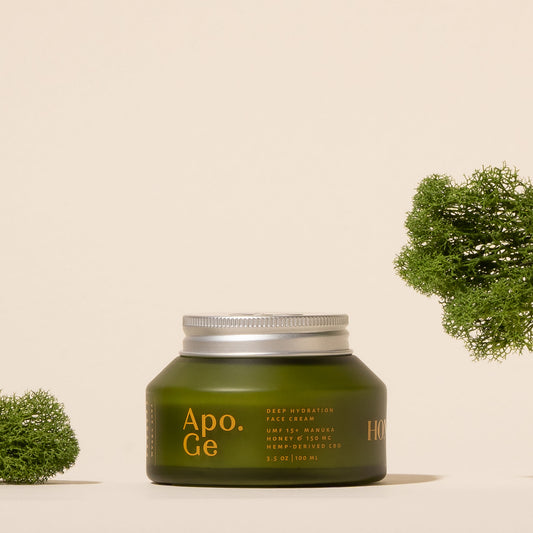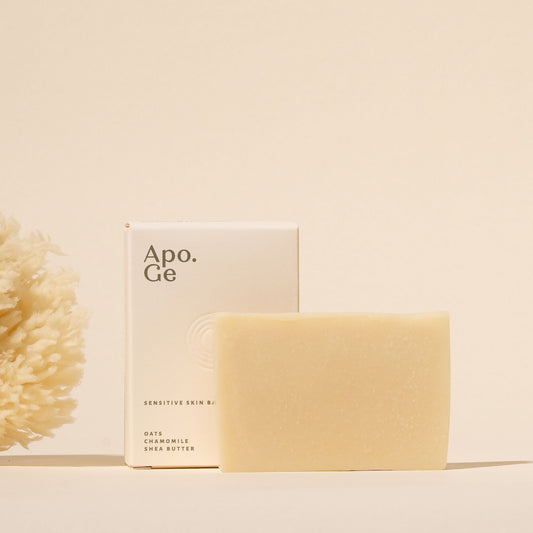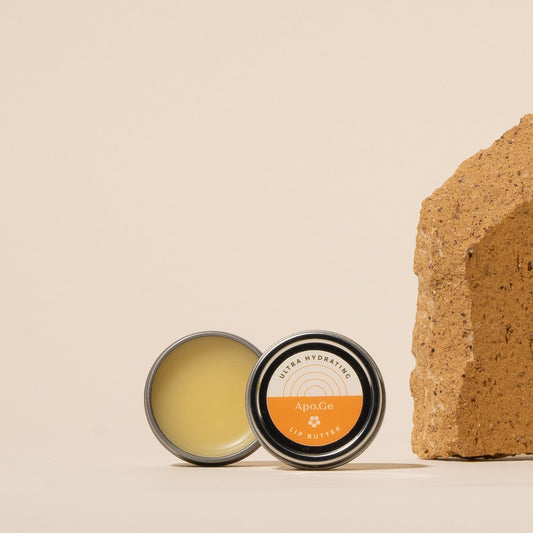

Mānuka honey has a reputation for being special, and that reputation is earned. It isn't just another "natural" skincare ingredient riding a wellness trend. The science behind it is specific, and the results — for acne-prone, sensitive, and post-breakout skin especially — are real. Here's what mānuka honey actually does for your skin, and why the grade of honey you use matters more than most brands will tell you.
What makes mānuka honey different from regular honey
All honey has some antibacterial activity, thanks to naturally occurring hydrogen peroxide. Mānuka honey has that too, but it also contains methylglyoxal (MGO) — a compound found in high concentrations almost exclusively in honey from the mānuka bush (Leptospermum scoparium), native to New Zealand and parts of Australia.
MGO is what gives mānuka honey its potency. Unlike hydrogen peroxide, MGO is stable. It doesn't break down when diluted or exposed to your skin's natural moisture, which means it keeps working long after application. On top of that, mānuka honey is packed with enzymes, vitamins, and a combination of antioxidants not found in other varieties of honey. It's a genuinely different ingredient.
What mānuka honey does for your skin
Mānuka honey works for all skin types, but it's especially well-suited to skin dealing with breakouts, dryness, sensitivity, or post-acne marks. Here's how it performs across common skin concerns:
Breakout-prone skin. MGO targets Cutibacterium acnes — the bacteria most responsible for inflammatory breakouts. Clinical research on mānuka honey shows it disrupts bacterial cell walls without the harsh drying effect of benzoyl peroxide or salicylic acid. Your skin gets the antibacterial action without losing the moisture it needs to heal. (For the full peer-reviewed breakdown, including a 2020 systematic review of 32 studies, see what the research actually says about mānuka honey and skin.)
Dry and dehydrated skin. Mānuka honey is a natural humectant, meaning it draws moisture in and helps your skin hold onto it. If you've layered moisturizer after moisturizer without seeing results, you likely need a humectant working underneath, not more occlusive product on top. Mānuka honey handles that.
Sensitive and reactive skin. The anti-inflammatory compounds in mānuka honey calm irritation and reduce the appearance of redness. Certified herbalist and Apo.Ge founder Colleen Poe chose mānuka honey as the cornerstone ingredient across the product line specifically because it delivers results without triggering the reactivity that synthetic actives so often do.
Rough texture and uneven tone. The enzymes and humectant properties in mānuka honey work together over time, smoothing rough patches and supporting a more even complexion. This isn't an overnight result, but with consistent use it compounds noticeably.
Honey-infused skincare for acne-scarred skin
One of the most underappreciated things mānuka honey does is support skin recovery after a breakout clears. Post-inflammatory hyperpigmentation — the dark marks acne leaves behind — responds well to ingredients that promote gentle cell turnover and help skin repair itself. MGO supports this without the irritation risk of chemical exfoliants like glycolic acid, making honey-infused skincare a strong choice for skin that's healing and still sensitive.
The Deep Hydration Face Cream pairs 510+ MGO mānuka honey with hemp seed oil (comedogenic rating 0) and kelp bioferment to keep post-acne skin hydrated, protected, and supported while it heals. It's the product Colleen reached for when formulating for exactly this concern: effective results that don't come at the cost of irritation.
Dealing with post-acne marks or healing skin?
The Deep Hydration Face Cream combines 510+ MGO mānuka honey with hemp seed oil and kelp bioferment to support your skin's healing process without irritation. Rich but not heavy, and non-comedogenic.
How to read MGO and UMF ratings
Not all mānuka honey will deliver meaningful skincare results. The grade matters, and two rating systems are commonly used:
MGO (Methylglyoxal) measures the concentration of methylglyoxal directly. The higher the MGO number, the stronger the antibacterial activity. For skincare results — particularly for breakouts, texture improvement, or post-acne marks — look for 500+ MGO.
UMF (Unique Mānuka Factor) is a broader authenticity and quality marker. A UMF grading test measures four naturally occurring compounds: leptosperin, MGO, DHA, and HMF. UMF 15+ is roughly equivalent to 500+ MGO. Both are legitimate rating systems. What matters most is that the brand tests their honey and publishes the results.
At Apo.Ge, every formula uses 510+ MGO mānuka honey sourced from a small, family-owned apiary on the North Island of New Zealand. The test results are on the website because transparency isn't optional when you're making efficacy claims. If you want to understand the full difference between the two systems and why the concentration cutoff matters, the research breakdown covers it in detail.
How to use honey-infused skincare in your routine
There are two approaches: raw mānuka honey applied directly as an occasional face mask, or formulated products that deliver consistent, daily benefits. Both work, but they serve different purposes.
A raw honey mask — applied for 15 to 20 minutes and rinsed off — can be useful for an acute breakout or a weekly treatment. For daily benefit, formulated products are more practical. They're pH-balanced, stabilized, and paired with complementary ingredients that amplify the honey's effects rather than simply delivering it.
If you're starting out, the Discovery Set is the easiest entry point — a full 3-step routine built around 510+ MGO mānuka honey and hemp, formulated for sensitive, acne-prone, and combination skin. For targeted daily moisture and barrier support, the Deep Hydration Face Cream is the most direct application of everything mānuka honey does best. Both are Leaping Bunny certified and free of synthetic fragrance.
Frequently asked questions about mānuka honey skincare
Is mānuka honey comedogenic?
No. Mānuka honey has a comedogenic rating of 0 to 1, making it one of the least likely natural ingredients to clog pores. It's water-soluble and non-occlusive, so it hydrates without leaving the kind of heavy film that traps sebum and causes breakouts. It's safe for acne-prone and oily skin types.
What MGO rating do I need to see results?
For meaningful antibacterial and skin-healing benefits, look for 500+ MGO or UMF 15+. Lower-rated mānuka honey may offer some moisturizing effects, but it won't deliver the same performance for breakouts, texture concerns, or post-acne marks. The grade isn't a marketing number, it's a measure of potency.
Can honey-infused skincare help with acne scars?
Yes, especially for post-inflammatory hyperpigmentation — the dark marks left after breakouts heal. MGO supports gentle cell turnover and the skin's repair process without the irritation risk of chemical exfoliants. Results build with consistent daily use rather than appearing overnight.
What's the difference between UMF and MGO?
MGO measures methylglyoxal concentration directly. UMF is a broader quality marker that accounts for four compounds — leptosperin, MGO, DHA, and HMF — that together define authentic mānuka honey potency. UMF 15+ is roughly equivalent to 500+ MGO. Both are valid systems. Look for either on the label, and confirm the brand publishes independent test results.
Does mānuka honey work for sensitive skin?
Yes, and it's one of the better options for it. Mānuka honey's anti-inflammatory compounds reduce irritation and redness without synthetic actives that commonly trigger reactivity. Apo.Ge formulates without synthetic fragrance specifically because it's one of the most common irritants for sensitive skin types.
Ready to see what 510+ MGO mānuka honey does for your skin?
Every Apo.Ge product is built around the same medical-grade mānuka honey we've covered here — formulated by biologist and certified herbalist Colleen Poe for sensitive and acne-prone skin. The Discovery Set is the full 3-step ritual in trial sizes. Your skin gets to decide what it loves before you commit to full sizes.